


As I argued last time, a good passing game isn’t fragile. Said another way, a good passing game concept works in structure by putting defenders in conflict. When a defender takes away one route another route comes open. It doesn’t rely on a defender messing up or rely on receivers finding a way to “get open” on their own.
In their game against Vanderbilt, Texas ran a full-field concept combining the option route with a shallow and dig route combination on the backside that put defenders in conflict. The result was three plays, three different receivers getting the ball.

The Play Design
Each play begins with a tight trips alignment. The number two receiver then takes off in an out motion to become the new number one receiver. This motion, made popular by the Miami Dolphins with Tyreek Hill, achieves the normal route spacing you’d expect from a trips set. However, because the quarterback snaps the ball with the receiver still on the run, the defense has to sort out the new alignment quickly while the man in motion gets a running start.
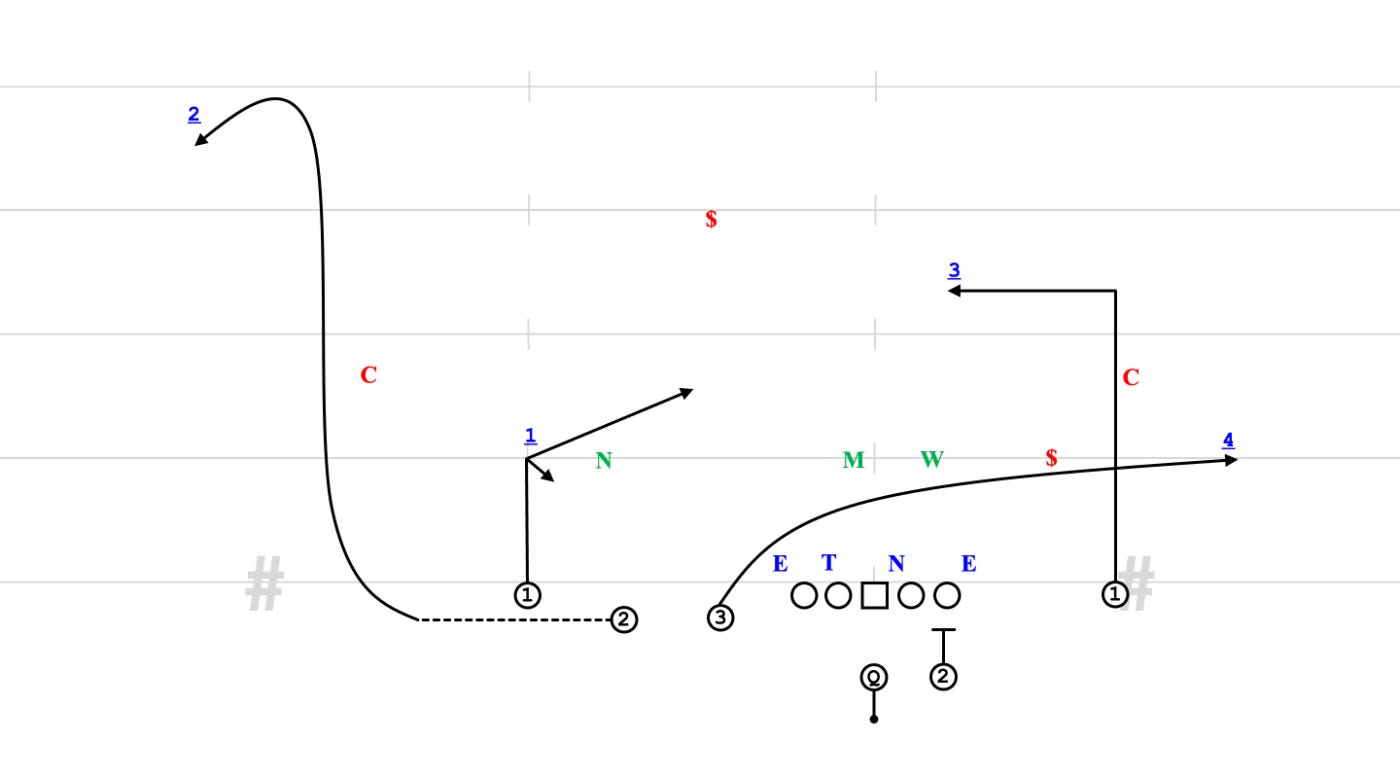
The primary route is the option by the new number two receiver. The motion helps put the flat defender, the first read, in conflict between the option and comeback. The motion also clears up the read for the option receiver. The motion can move this defender outside the option receiver pre-snap to make room for the hitch or slant. If the flat defender stays inside or is sticky to the option route runner on the outside, then the comeback will be open. The key is that the defender cannot cover both the option and the comeback.
The other defender in consideration for the slant route option is the hook defender. If he’s in the slant window, then the option receiver should settle for the hitch like so:
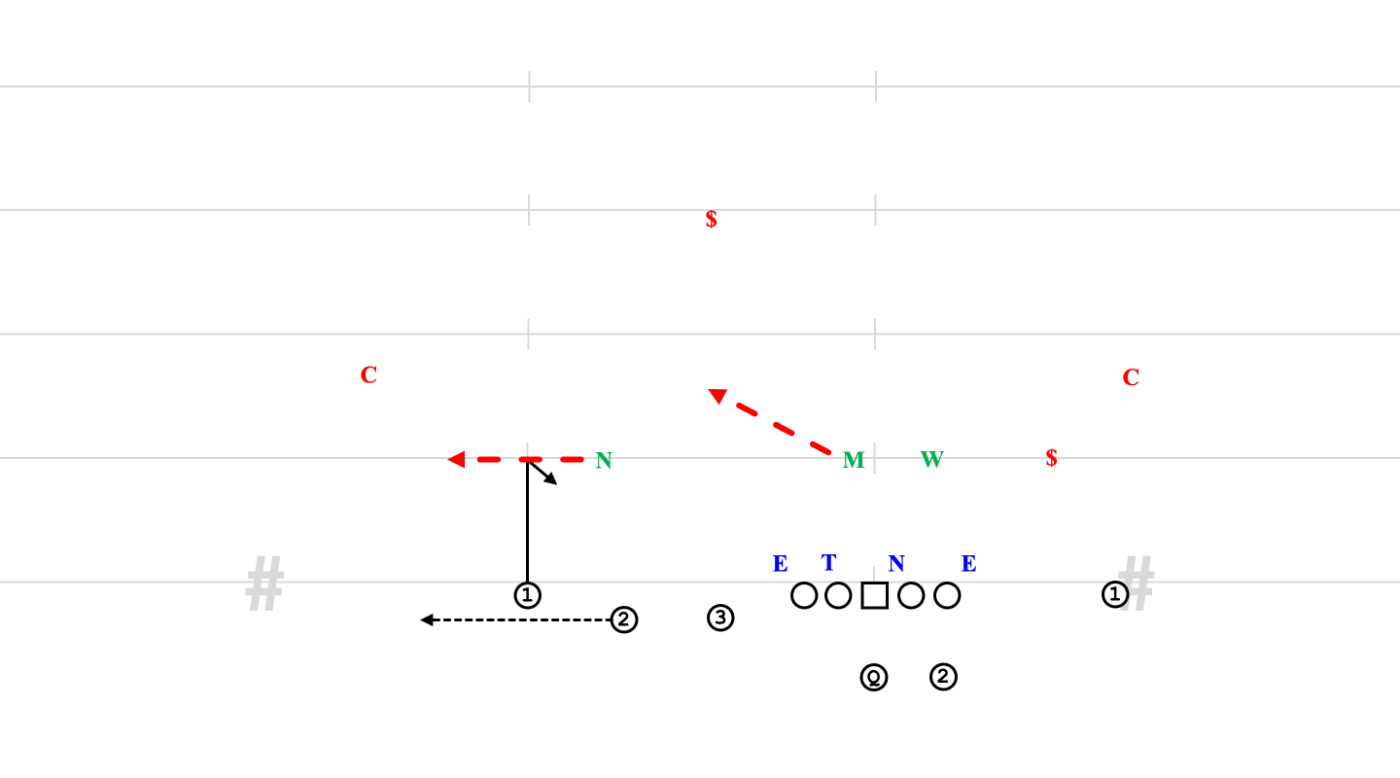
In the game, the Longhorns got the hitch twice and a slant once because the window was open: the first time. Let’s begin there.
Hitting the Option
3rd and 4 at the +44 (4:34 1Q)
The defense runs a creeper with the Mike pressuring off the left edge and the backside defensive end dropping into the weak flat to complete a Cover 3 look. Cover 3 isn’t an ideal look for the slant choice of the option route because of the hook defender present to the playside. However, the defense started in a two high shell with the field safety (the hook defender) never sinking low enough to take away the slant.
By design, the comeback isn’t open when the flat defender moves outside the option. To the backside, the offense is able to also put the defense in conflict by creating a numbers advantage.
The defense was in a balanced Cover 3 with two underneath defenders on either side of the ball. Therefore, on the backside, the offense needs a concept that has three receivers attacking the underneath zones to put one of those two underneath defenders in conflict. The offense achieves this goal by putting the running back on a swing into the flat after checking the protection. Because of pressure on the next two clips, the running back gets eaten up in the protection so this is the best example of the backside routes putting the defense in conflict.
Hitting the Comeback
3rd and 4 at the +28 (8:10 2Q)
The out motion moves the flat defender out, but not outside the option route since he is closer to the offensive line as a part of the defense’s disguise. Therefore, the flat defender latches to the option route and the window to throw the comeback comes open.
The defense ran a five man pressure, so they were also short an underneath defender. That pressure caused the running back to stay in protection and allowed the backside dig-shallow combination to maintain a numbers advantage.
But with three underneath defenders, the hook defender, the middle of the three, is the key to where the offense has the numbers advantage whether to the playside or backside. If the hook defender goes to the playside, then the slant option isn’t there (the hitch could be open if the flat defender were to get outside it, but that doesn’t happen here). If the hook defender goes to the backside, then the defense can match the dig and the shallow route because a flat defender is also to the backside but they leave the slant window open.
So because the flat defender started inside the option route staying tight to it and the hook defender pushed to the play side, the comeback was the right read.

Hitting the Dig
3rd and 5 at the -12 (13:40 3Q)
This play is packed with information so we’ll take it step by step.
The defense runs a simulated pressure showing six defenders at the line of scrimmage. There is a clear flat defender pre-snap so that’s where the quarterback’s eyes should be. There is also a defender standing in the hook.
At the snap, the picture changes: the flat defender gets wide to take away the comeback and the defensive end drops into the hook between the flat defender and the other hook defender which causes the option receiver to run the hitch. I’d argue Manning could’ve taken the hitch, but a dropping defensive end is always a bit of a shock, and it’s understandable he moved on.
So the defense ends up in a Cover 3 Strong look with three underneath defenders to the playside and one to the backside.
Now to talk about the elephant in the room: a comeback wasn’t run because the cornerback stayed low and left the receiver scot-free down the sideline. The offense would’ve liked to see this ball thrown. However, it does show discipline in Manning’s reads. He saw an underneath defender outside his option, and so unlike the last play, the comeback window isn’t open. Unfortunate, but we get to see how the play progresses to the backside dig-shallow combination.
The backside combination between the shallow and dig creates a high low on the one weak flat defender since the defense is in the Cover 3 Strong look, and the swing by the running back isn’t needed. The defender can either play low on the shallow and leave the dig open or play high on the dig and leave the shallow open. Staying high would be the better technique because he’d still be in a position to come down and make a tackle on the shallow.
Had the defense not been in Cover 3 Strong and had two defenders to the backside, then they’d have been able to match the numbers of the offense. But, as mentioned prior, the offense still had the hitch available, Manning just didn’t take it.
The last thing to consider is that if the hook defender does make it all the way to the hitch, like the dropping defensive end almost does here, then the slant window can become open though in a different way than the first clip. The slant window becomes open when nobody is in it. So if the hook defender pushes all the way to the top of the stem of the option receiver’s route, the receiver could take the slant. Therefore, the play doesn’t just work here because the defense is in a strong rotation.
Conflict is Good
Against zone coverage, the pass game comes down to creating numbers advantages. The offense wants two-on-one situations where two routes are attacking close to one defender’s zone.
This play by Texas demonstrates the micro-level conflict created between two routes on a zone defender, and the macro-level conflict of combining concepts to attack all the underneath defenders.
The play side flat defender can’t cover the option and the comeback. The hook defender can’t cover both the hitch and slant options. And to the backside, the defense can’t match numbers to the three routes without being short to the play side.
This premise, that conflict is good, builds consistent concepts with open receivers that don’t rely on the defense messing up or an out-of-structure play from the offense.