


I’ve long wondered what the Vikings defense looks like on a high school field. Is it possible? How would it translate? Can we actually teach our kids to run something that looks more complex and insane than it really is? A lot of those answers are sitting right there in the Vikings preseason tape. Will they get more wild and more complex as the season goes? Yes. But for now, what they’re showing is digestible enough for a high school defense, and from there you can layer in your own wrinkles. At the very least, I think you could roll this out on a Friday night and be gap sound from snap one.
If I were to break this defense down, it aligns out of two personnel groupings for our purposes here. An odd, 3-4 look with two walked down overhangs, and an even nickel look similar to a 4-2-5 with walked linebackers. I’m assuming most high school staffs have the personnel to align in both, we did when I was coaching. Out of both groupings you’ll see a mix of cover 2, 3 and 4, along with fire zone pressures paired with different underneath coverage rules. For part 1, we’ll focus on the 3-4 odd look.
Playing the Run from Odd
The Vikings spend plenty of time in their base 3-4, which presents as a 5-man front almost every snap. A lot of it is traditional over or under fronts, mainly under, with five defenders down on the line of scrimmage. What’s the goal? Get a minimum of six defenders in the fit at the line of scrimmage on every down against the run.
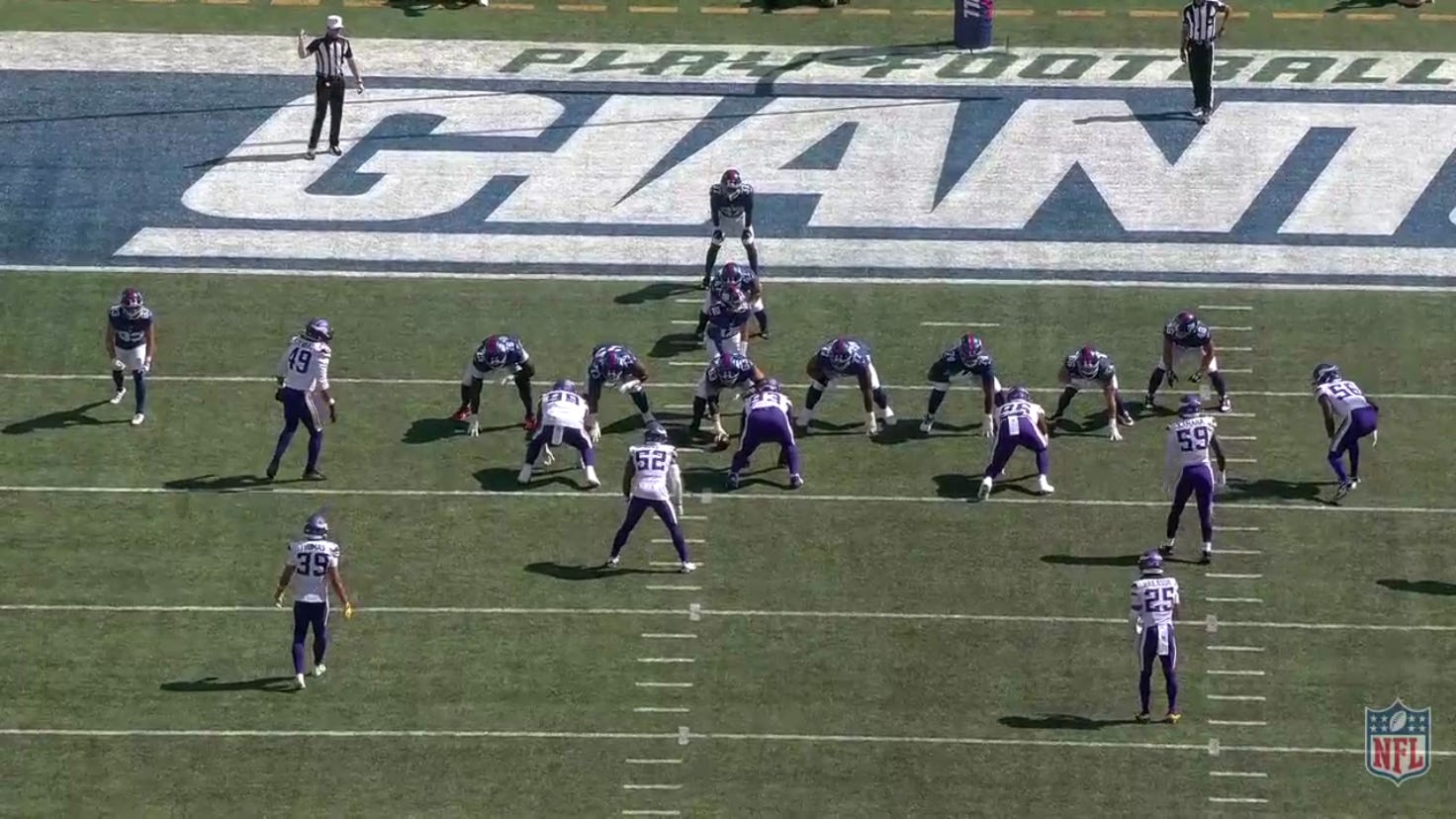
The Vikings certainly have a favorite run stopping pressure out of this personnel grouping too. They align in an under front above, then bring a linebacker while slanting the defensive line, which creates a six defender fit at the line of scrimmage along with movement up front.
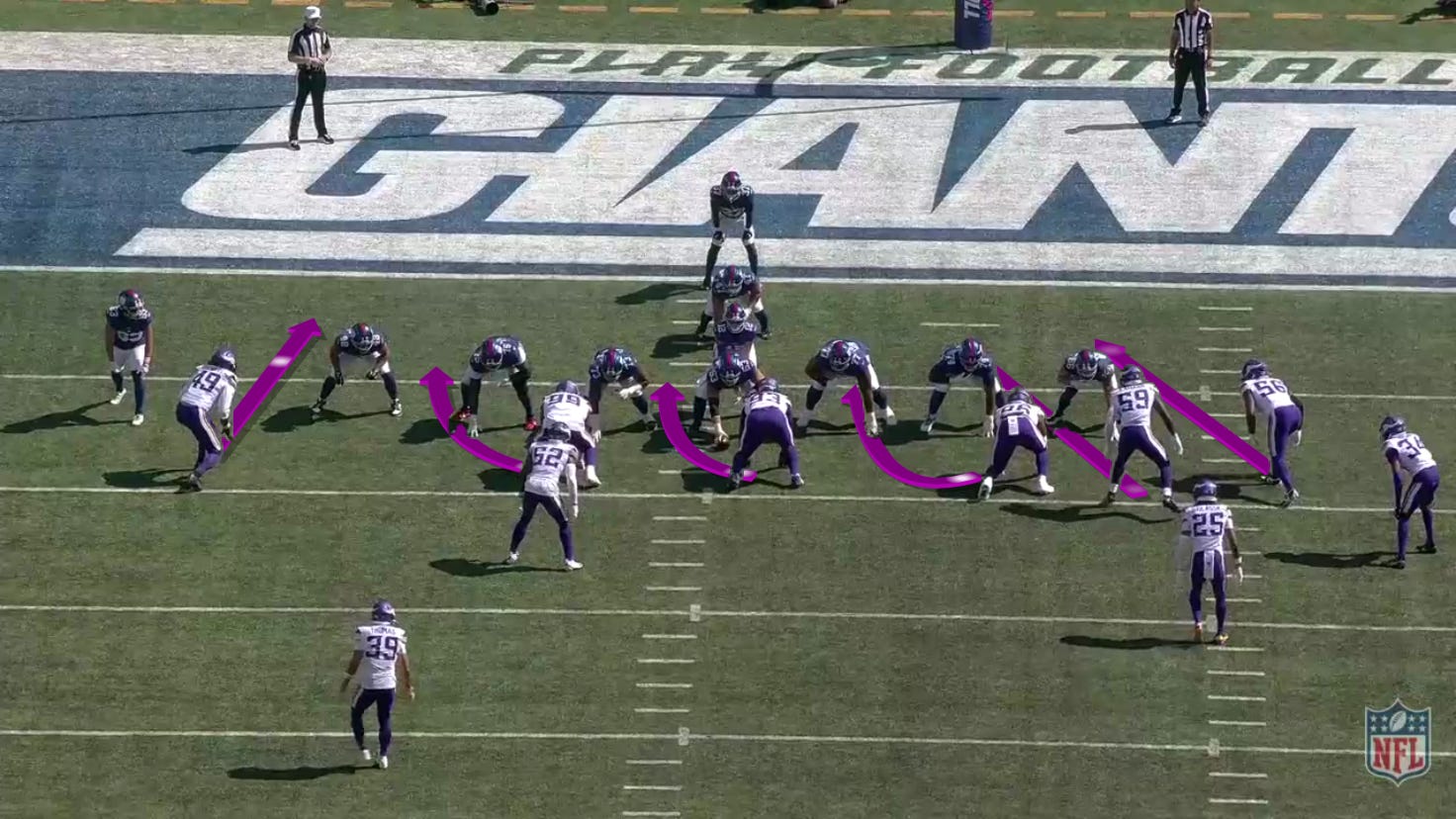
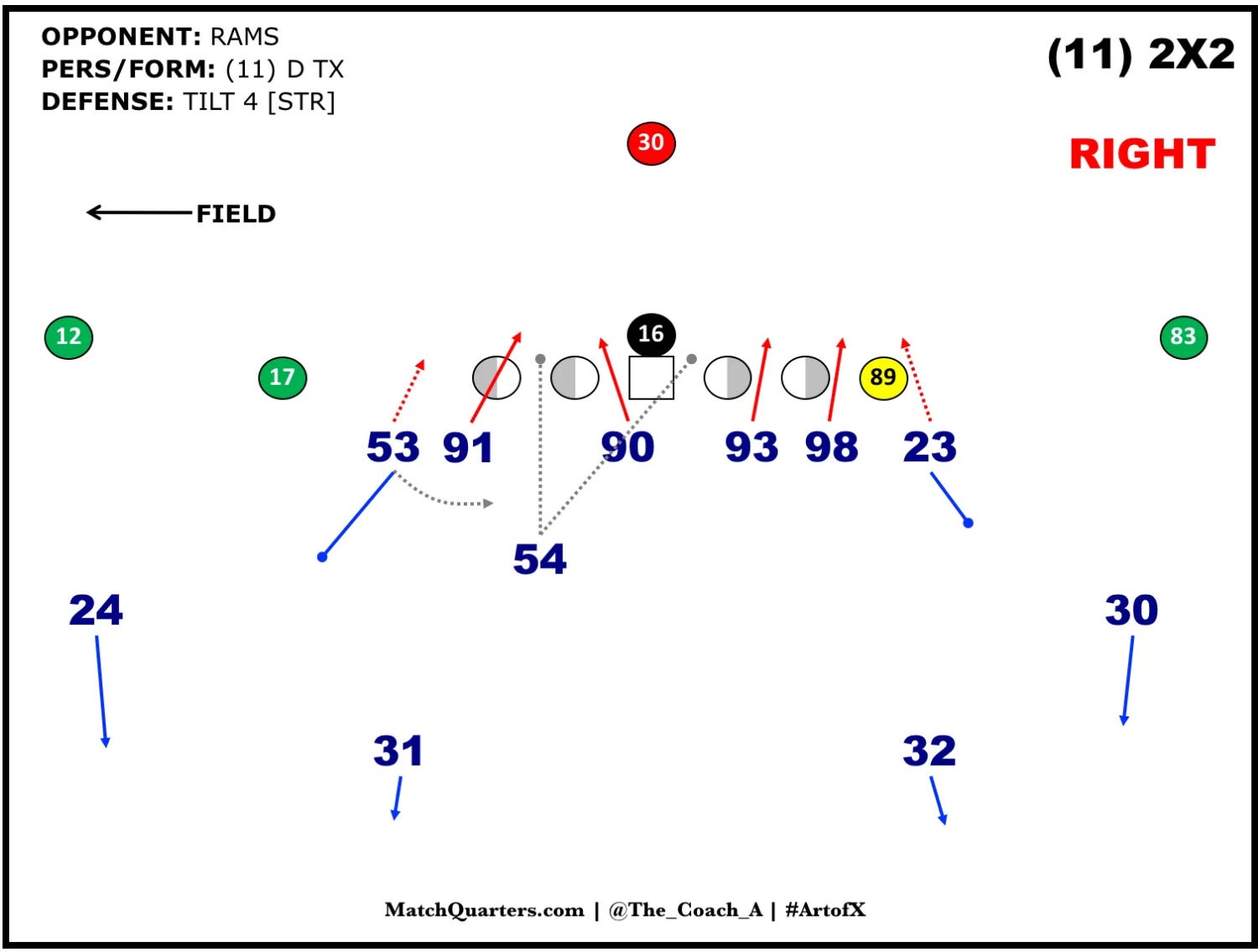
Here’s an example of exactly what we talked about above. The Vikings bring six and play 2 under, 3 deep “eyes” or “hot” coverage. On early downs, here it’s first down, this is a great run pressure that builds an eight man box in a hurry. The Giants run power and the linebacker works right through the open gap for a tackle for loss. This feels a lot like the “Tilt 4” the Patriots used against the Rams in Super Bowl LIII.
A series later we get the same pressure against a slightly different look from the Giants, same result, a tackle for no gain.
One more time, and again, it just makes it tough to run into the teeth of that defense.
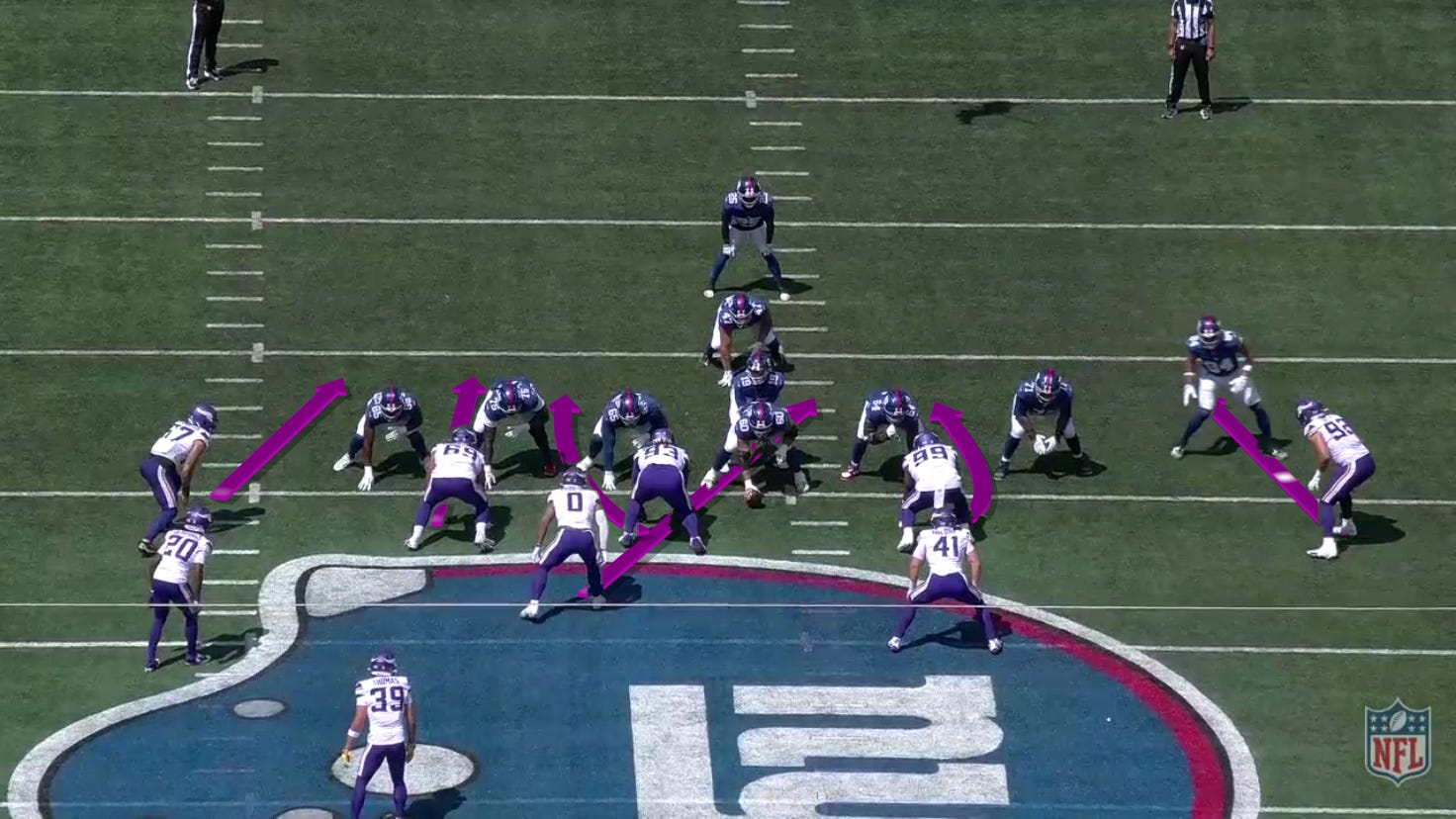
Similar pressure here, but a slightly different path. This time the linebacker works inside off the center. He gets a little excited here and decides to take the center on instead of reading the block and crossing his face, though I don’t know their exact rules on that, but he recovers nicely off the spin and makes the play anyway. This defense is fun to watch because of the mentality Flores has instilled in this group. They refuse to quit on a play.
Attacking the Quarterback from Odd
The Vikings also attack the pass from their odd set by bringing linebackers, but they pair that with dropping edge players into coverage, whether it’s 3 under, 3 deep fire zone, or “Deuce” or “Spot” fire zone, which is 4 under 2 deep or 2 under 4 deep.
Here the Vikings bring an interior linebacker and drop their edge player to the field. They’ll play what I call “Spot” coverage, which is 2 under, 4 deep. The Ravens QB does a good job getting the ball out, but the Vikings have a 2 for 1 rush at the bottom on the right tackle.
This is essentially the same pressure, but the Vikings get run action, so the field side OLB stays home in the fit and they still get that six man front we’ve shown throughout this article.
Final Thoughts
In their base 3-4 the Vikings find ways to get to that 6-1 box in the run game through a handful of different presentations. And when they smell pass, they’ve already got a built in five or six man pressure dialed up to create havoc in the backfield. I absolutely think this is something you could install for Friday nights, and it fits well into a lot of Defensive Coordinators’ 3-4 defenses across the country. But your kids have to match that Flores mentality play in and play out.
So where does this ultra aggressive defense struggle? The main issue with playing fire zone coverage is against an offense willing to max protect, especially with max protect full slide. By the numbers, the secondary has holes, so if the offense can protect long enough, good quarterbacks will find them. How do the Vikings guard against that? They lean on their Nickel and Dime packages, and we’ll get into that in Part 2 of this series.