


Since stepping away from coaching, I’ve probably consumed more football content than I ever did on the job. But I’ve also had more time to branch out. And much to my surprise, cooking content, whether it’s real or fictional (if you haven’t watched The Bear, fix that), has taught me a lot about process, preparation, and leadership that translates directly to coaching. This article came about after binge watching every episode of “Being Gordon Ramsay” on Netflix. What I found were parallels to football coaching that lined up almost to a T.
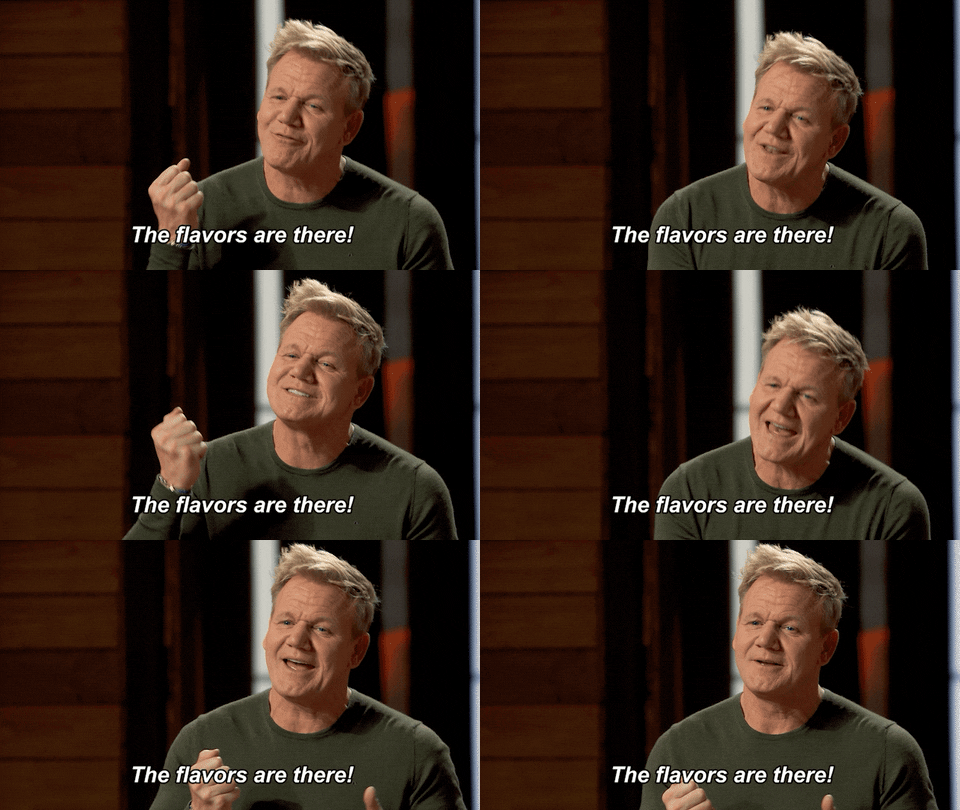
The overarching theme of the show is Gordon opening a brand new restaurant with a massive personal investment, and you get to see everything that goes into the process. Couple that with his TV shows, other restaurants, and six children, and it's a front row seat to someone pressing forward in a high stakes, pressure packed situation while trying to balance being the best and being present for his family. That's something a lot of coaches can empathize with. No, I'm not saying we're Gordon Ramsay. But that delicate dance between pushing to be the best, examining every detail, managing a group of coaches and players, getting critiqued by every clown in the stands, and still trying to be a good Dad? It's overwhelming. And while it's not football, if you listen to Gordon talk about food, you can hear the same fire that every football coach I've ever been around carries.
The Process
If you've ever been near a high end kitchen, you understand the process. It's a lot like being on a football staff. Meetings, plans, prep, tasting, adjusting, taking chances, and performing under pressure. I can't speak for the kitchen, but I'd imagine it's a lot like game night. Nothing ever goes quite like you planned it. That's why so much of your week goes into the plan, then the backup plan, then the "everything just hit the fan" plan. There is no safety net on game night.
“And I’ll be honest with you, there’s always that little needle of fear. You’re going to lose it. And I hold onto that needle. You know, I want that little prod just to remind myself.” -Ramsay
I bet a lot of coaches can relate to this. I loved the pressure. Hell, I’m terrible at things that involve no pressure. But most coaches I’ve talked to over the last three or four years share a common trait, and it’s thriving under pressure. Sometimes we have to create that pressure ourselves. That chip on our shoulder to push when no one else will. I think that’s what Ramsay is referring to here. Or at least I’d like to think so.
“That’s why I’m a hard and difficult person to work for. I wanna make sure everything’s perfect. And I don’t want to let anything slip. So it’s sort of all or nothing.” -Ramsay
Gordon then proceeds to talk about minute details in a restaurant that none of us would ever think about, or maybe even care about. But the point stays true. The devil is in the details. How many of us coach the most tiny details whether it’s footwork, drill layout, hand placement, or yes, even uniform details like Chef Ramsay covers with his staff? Because it’s important. The little things add up to big things, and big things turn into losses. And losses after a small detail was missed are the ones you’ll never forget. I don’t remember the blowout losses, but I remember every close loss where maybe if I had done a slightly better job coaching we could’ve won. Details matter.
“You know, to be a part of, actually opening that and making it successful is really exciting. But, it’s a big role. Everything that I do, that the team does, is directly associated with Gordon. That’s why every day we make sure that what we do in every restaurant is always up to that standard that he expects and that he sets.” -Michael Howells, Executive Chef
Every program is a reflection of its head coach. And to an extent, its assistant coaches. Are you setting the standards and holding everyone accountable? It starts with expectations and laying out duties and roles for your assistants. Make sure the standard is the standard in everything you do. Then it has to trickle down to players, usually through your leadership group, then down to the rest of the roster, then down through junior varsity and freshman levels. If you can teach accountability among staff and players, and truly get everyone to buy in, the sky is the limit in your program. Player led accountability is one of the most powerful things in your locker room.
“There are emotions, and there are, you know, heated discussions that you get in kitchens, but it’’s always for the right reasons. It’s to make what were doing better. It’s about the end product.” -Michael Howells, Executive Chef
The best staffs I’ve ever been on were exactly like this. We challenged the heck out of each other, sometimes to the point of anger, but it was always easy to forgive and give each other a hug after because we all knew it was in the pursuit of perfection. Even though we’d never get there, it certainly wasn’t for the lack of effort or caring. Great coaches have tough conversations, and great coaches don’t mind being challenged. It takes a special person to do this, but the best ones realize they can’t always be right.
Gordon goes on to talk about the young chef responsible for those two quotes above. What stood out to me was the foresight he had to help grow a young sous chef into an executive chef. Ramsay saw talent, helped it grow, challenged it, and built one of his biggest assets not through micromanagement but through transformational leadership. He meets with this chef throughout the process on the menu, which they know has to be one of the best in the world, but he always delivers what feels like the perfect constructive criticism. One of his biggest points is to loosen up and have some fun. What we do is a game, and while there’s an intense amount of pressure on Friday nights, it’s always important to remember that. And it turns out when you’re having fun, usually your players are too.
Being a Teacher
During the documentary, Gordon’s daughter is on her way to culinary school, and he’s giving her advice in the car the whole ride there. Whether it’s your kid or not, we’re called to be teachers. The best of us are always teaching. And in between the lessons, we’re being taught ourselves.
“But, you are going to make mistakes. And being nervous is quite a cool thing. But sponge. Get over mistakes and don’t dwell on them.” -Ramsay
What a lesson. Sometimes we forget how hard it is to be a kid. The fear of being ridiculed by others is real, and most of us grew up before YouTube and Twitter. Can you imagine every missed tackle or fumble in your career being blasted on TikTok? It can be brutal. But as teachers and coaches, it’s our job to make players not fear mistakes, because they’re going to happen. Instead, after making a mistake, they need to understand what they did wrong and fix it. Fear of failure is crippling, and most kids carry that fear. As older men we understand that life is hopping from one failure to the next with great enthusiasm that you’re not going to screw it up again because of the lessons you learned. Spoiler alert, you will fail again. And hopefully, learn something new.
“It was the hardest because I was learning the most.” -Ramsay
Back to the pressure theme. Football is a game of pressure. You either pressure or get pressured. We push players hard, we put pressure on them to get better, but it’s important to build the right relationships so players understand and appreciate that pressure being placed on their shoulders. Having ownership in one’s craft can make a world of difference.
I’m scared. Im scared to fuck up. I think I have enough time to practice, but I’ve got a lot to learn. -Chef in Kitchen
As coaches, how do we get our players from “I’m scared to mess up” to “I’m confident to execute the plan”? That’s the secret sauce. We seldom get the best players, but we are still responsible for turning them into football players that can execute a game plan. Understand that players will always feel this way. I did. But somewhere in between that feeling and hundreds of reps, encouragement, hard work, and adjustments, I became confident in my ability to execute. I just hope some players along the way feel like I did that for them.
Being a Father
Gordon has an interesting household. Four older kids and now two young boys separated by what I’m guessing is about a decade. This dude loves his family. Much like I hope we all do. While some of us feel like we’re always short on time, he really is, yet somehow he finds a way to always be energetic and excited around his kids. Be excited around your kids. And your players. Excitement looks different with different coaches, but just be genuinely excited to be around your own family first, then make sure that carries over to the field. Not the other way around. I’ve failed at this before, but never again.
“I know I can text him or call him anytime.”
“He’s a very different person than who he is on set. To me, he’s just Dad.”
One thing that resonates is that Ramsay is always doing something active with his own kids. He’s making memories instead of sitting around. I understand how tired we get as coaches, but making sure our kids have memorable moments is the key to making less time with them actually matter. Whether you like it or not, you will get fewer hours with your kids than other parents. But you have the ability to make those hours way more impactful with effort.
And while being a father to our kids is the most important thing we’ll likely do within our lifetime, we also have to remember that to some of our players, we’re their father too. Sometimes we’re the only male figure in their life that holds them accountable, helps them daily, and sadly, tells them we love them. Remember, our job is to help build great men and leaders, not win football games. Winning is the byproduct, not the singular focus. And if you disagree?

Dealing with the Critics
Gordon covers a few stories about critics and how, at times, they get to someone as big and successful as he is. Most of us will never hit that level of famous, but I'd argue we get criticized just as much for the tiniest fraction of the pay. He does pivot to talk about how traditional critics are dying and how embracing social media influencers is important. He says they don't take six weeks to fill up a dining room because of their instant impact. Now, how in the world does this apply to football? Embracing your community through social media and events can be a powerful mechanism to "fill your stands." One of the best podcasts we've done was with Coach Tom Yashinsky, and he didn't put one diagram or play on the white board. Instead he went through the biggest list of community outreach programs I've seen at any high school. Ever. And I'll bet you a lot of money that even when they don't play well up in Onalaska, Wisconsin, the criticism is just a little softer because parents better understand the value that coach brings to their community, not just Friday nights on the scoreboard.
Final Thoughts
“We don’t compromise, and we don’t let things slide.” -Michael Howells, Executive Chef
I’ve always loved cooking shows, this documentary and “The Bear” especially, because they are sometimes the closest I’ve felt to being a coach again. The meticulous preparation, the repetition, the pressure to deliver when it counts. It all feels like football. The kitchen and the sideline aren’t that different. Both demand attention to detail that borders on obsessive. Both require you to develop people, not just manage them. Both put you in situations where the plan falls apart and all you have left is your preparation and the trust you’ve built with the people next to you. And both will chew you up if you don’t find a way to balance the intensity of the job with the people at home who need you to just be Dad when you walk through the door.
If there’s one thing Gordon Ramsay reinforced for me, it’s that the best leaders never stop being students. They stay curious. They stay hungry. They hold a standard without apology, but they also know when to loosen the grip and let the people around them grow. That’s coaching. Whether you’re plating a dish or calling a defense, the principles don’t change.
While this one resonated for me, I hope it resonated for you too. Being a football coach is one of the greatest callings in a community. Be a great chef and lead the brigade, but make sure you’re building those future chefs that will make an impact long after you’ve turned in your whistle.
Now look, I have no idea if this article was interesting or incredibly stupid for coaches to read. Creating content does come with the anxiety that coaches will hate it and think you’re an idiot. Which I am. But like the points above, I can’t be scared to leave my comfort zone and write about football in new and unique ways.
Damn! What a read coach. Great article and I’ll definitely hit up your binge watch selections.
excellent